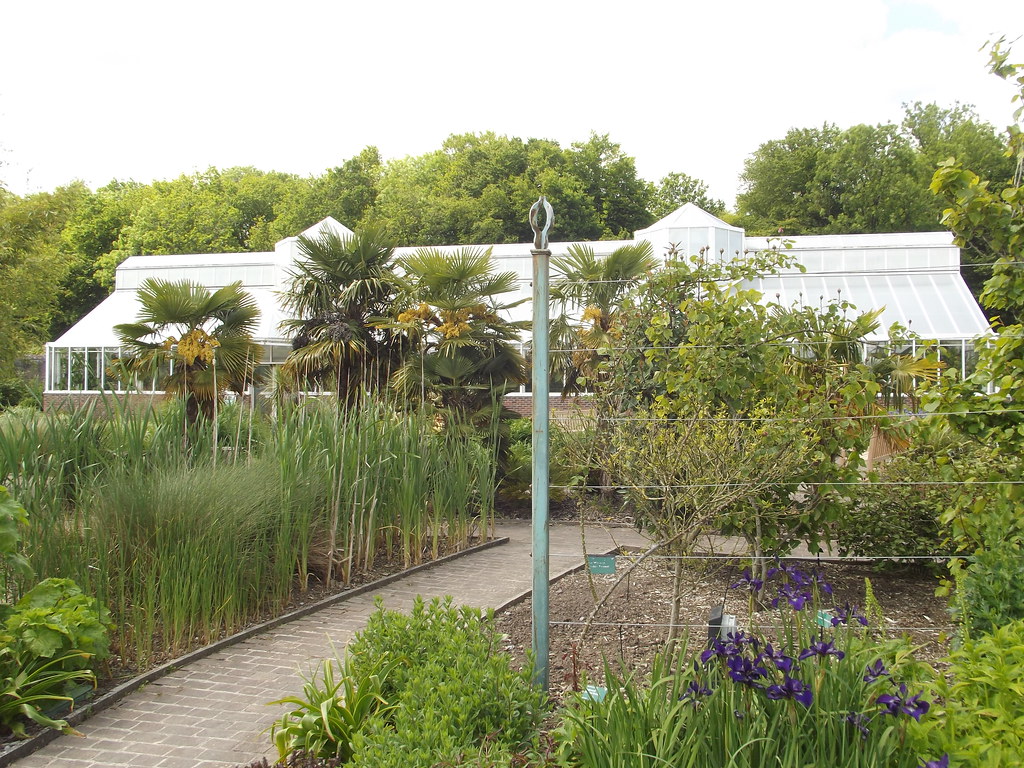
The lean-to greenhouse at Pant-y-Gors, near Tregaron in Ceredigion, was built in May of 1962 by a retired schoolmaster named Idris Llewellyn, who had returned from teaching in Birmingham and wanted a place to start his tomatoes. It is still standing. It is still in use. The current keeper is his granddaughter, a midwife named Bethan Llewellyn-Pugh.
The structure is 14 feet long, 7 feet deep at the base, and rises to 9 feet against the rear wall. The rear wall is the south-facing stone gable of the original 1840 farmhouse. The lean-to is glazed on the front and the two narrow sides and roofed in obscured glass on a softwood frame.
The wall is, in greenhouse terms, the entire reason the building works. It is two feet thick at its widest. It is rendered on the inside with a lime plaster that has darkened over the decades to a soft brown. It absorbs sun all morning and afternoon and releases it through the night.
Bethan keeps a thermometer pinned to the lime render at chest height. On a clear March afternoon at 4 p.m., the wall surface reads 64 degrees Fahrenheit. The air in the greenhouse is 67. At 7 a.m. the next morning the wall reads 58 and the air reads 51.
The thermal lag of a thick rendered wall is the lean-to gardener's most valuable inheritance. Bethan's tomatoes, planted along the wall in mid-April, are usually fruiting by the end of June. Her neighbour's freestanding greenhouse, on the same parcel of land, runs three weeks behind.
The lean-to is heated only by the sun and the wall. There is no paraffin burner, no electric tube, no propane. In the coldest week of any Welsh winter the interior will drop to about 36 degrees Fahrenheit at dawn and recover by noon to 55 if the day is bright.
What it holds, in February, is a row of overwintered Swiss chard, a tray of garlic chives planted in October, two flats of broad bean seedlings started in January, and a quantity of stored dahlia tubers wrapped in dry peat under the staging bench.
Bethan's grandfather installed the staging bench at waist height along the front of the greenhouse, on iron legs sunk into a low brick wall. The bench has been re-topped twice. The current top is reclaimed slate from a Welsh roofer who took down a chapel roof in 2019.
Under the bench is bare earth. Idris kept it that way deliberately, on the theory that the soil floor would buffer humidity and absorb spills. Bethan has not seen reason to change his mind. The earth is dressed once a year with a barrowload of leaf mould.
The glazing is single-pane horticultural glass, original to 1962 in many panes and replaced piecemeal as breakages occur. Bethan has, since taking over in 2019, replaced eleven panes. The replacements were sourced from a Carmarthenshire glazier who specialises in heritage repair.
Single glazing is not, by modern standards, efficient. A polycarbonate roof would halve heat loss. Bethan has been advised, twice, to re-roof. She has so far declined. The glass, she says, is part of the building. The plants do not seem to mind.
Ventilation is by a single 36-inch roof vent on a manual brass crank, also original. The crank handle is mounted on the rear wall at a height Bethan must reach for. The vent opens 18 inches at full crank. It is, in the Welsh climate, almost always required by May.
Bethan also leaves the lower door propped open on warm days with a slate doorstop her grandfather painted with a number 5 in white paint for reasons no one in the family remembers. The cross-draught between door and roof vent will move the interior temperature down 8 degrees in twenty minutes.
The cropping pattern is conservative. April through July: tomatoes (the variety Ailsa Craig, grown by the family since 1974), cucumbers, basil, and a single melon plant trained up a string. August through October: the last of the cucumbers, late basil, autumn-sown lettuce.
November through February: overwintering chard, garlic chives, broad beans, and the dahlia tubers. March: the beginning of seed-starting. The full rotation runs the calendar with no period of dormancy. The greenhouse is, as Idris is said to have intended, always in use.
Bethan has made two modifications. In 2021 she installed a 200-litre water butt against the inside of the rear wall, on the reasoning that water is an even better thermal mass than rendered stone. The butt is painted matte black. It collects from a downpipe outside the door.
The butt has added, she estimates, about two degrees to the worst overnight low. She waters from it in summer with a copper dipper that hangs from a nail above. The water is at greenhouse temperature, which the tomatoes prefer to cold tap water by a margin.
In 2023 she added a length of soft-flexible greenhouse shading to the outside of the glass for July and August, hung from hooks on a wire above the roof. The shading is a 30 per cent knitted mesh from a Lincolnshire supplier. It is rolled and stored in October.
Without the shading the high July afternoons had been scorching tomato leaves at the upper trusses. With it the temperature on the hottest day of summer 2023 peaked at 87 degrees Fahrenheit, down from a measured 102 the previous year. The crop was visibly better.
The lean-to has, by Bethan's accounting, paid for itself many times over and is now operating as essentially free capital. The annual inputs are a bag of peat-free compost, a packet of tomato seed (saved or bought), and the labour of about twenty minutes a day in season.
It produces, in a good year, around 80 pounds of tomatoes, a respectable cucumber crop, enough basil for the household and the neighbour's pesto, and a melon she has not yet successfully ripened. She is still trying.
What the lean-to offers, in the longer view, is the demonstration that a south-facing wall is the most valuable real estate a gardener can inherit. Idris Llewellyn understood this in 1962. He built the greenhouse where he did because there was nowhere else on the property it could have done as well.
Bethan plans to add a second water butt this autumn. She is considering, with reluctance, whether the time has come to switch to a polycarbonate roof. She has not yet decided. The glass, after all, has held for sixty-four years. She will give it a little longer.