The fig tree in the eastern bay of the glasshouse at Henden Manor, near Edenbridge in Kent, was planted in March of 1949 by a head gardener named Sidney Lumb, who had taken over the estate's gardens after the war. The tree is a Brown Turkey, which Sidney sourced from a nursery in West Sussex that no longer exists. It is still there. It still fruits.
The current keeper of the glasshouse, a fourth-generation head gardener named Florence Ottaway, prunes the tree every February and harvests from it every July through September. The 2025 crop, by Florence's count, was 184 ripe figs.
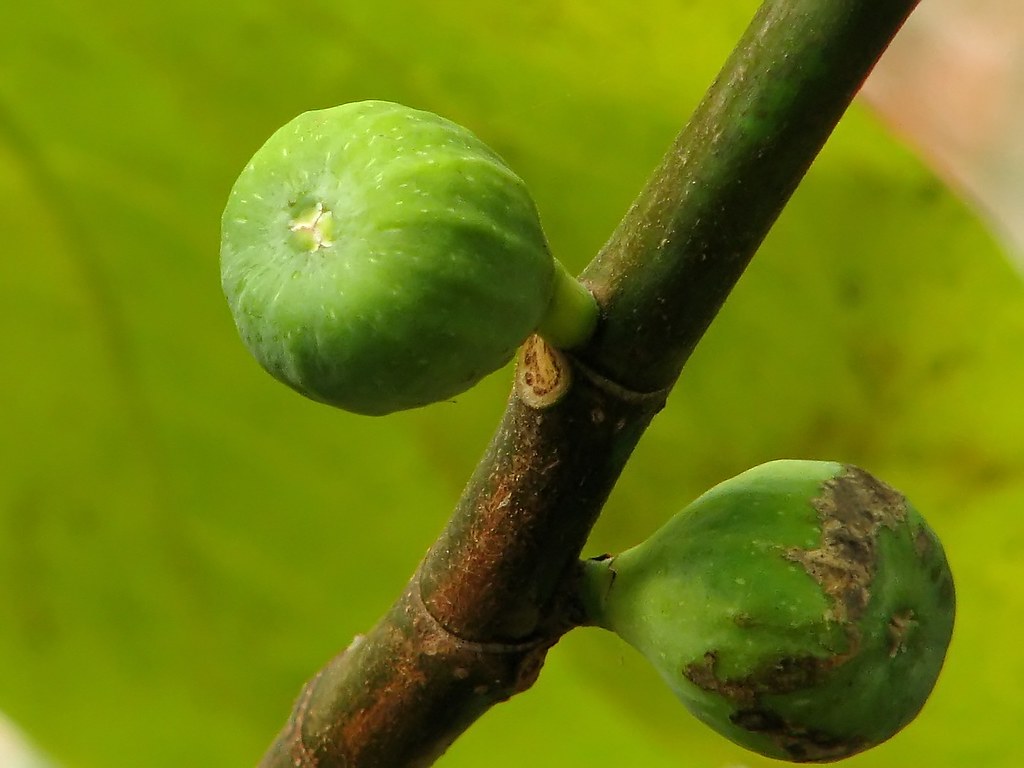
Wintergreen visited Henden in late April. The fig had broken bud three weeks earlier than the outdoor figs in the kitchen garden. The first embryonic fruits were visible at the leaf axils, the size of small peas.
The glasshouse itself is a 38-foot timber-and-iron lean-to built against the south wall of a 17th-century brick gable. It was commissioned in 1908 by the then owner of the estate, who wanted grapes and peaches. The grapes failed in the 1950s. The peaches went in 1979. The fig has outlasted both.
The structure is single-glazed in horticultural glass, mostly original, with sections replaced after a 1987 storm and again in 2014. The framing is pitch pine. The internal staging is slate. The heating, never used by Florence, is a row of cast-iron pipes along the back wall, fed historically from a coal boiler that was decommissioned in 1962.
The glasshouse runs cold in winter. Florence's records, kept in a leather notebook handed down from Sidney Lumb's successor, show that the interior drops below 32 degrees Fahrenheit on roughly twenty nights a year. The fig has experienced perhaps fifteen hundred such nights in its lifetime and is still in vigorous health.
This is the first thing the fig teaches: that a tree marketed as a tender Mediterranean species is, in fact, considerably hardier than the catalogues suggest, provided it is dormant during the cold and is not waterlogged.
The Henden fig is planted in a brick-walled pit measuring 3 feet by 4 feet, sunk into the glasshouse floor and lined with broken slate for drainage. The root restriction is deliberate. A fig planted in unrestricted soil will grow vegetatively at the expense of fruit. The Henden pit forces the tree to fruit.
Florence opens the pit once every three years, in February, and replaces the top six inches of soil with fresh loam mixed with bone meal. The bottom of the pit has not been disturbed since the original planting. The roots, she believes, extend through the broken slate into the foundations of the wall.
The pruning regime is severe and unsentimental. Every February Florence reduces the previous year's growth by roughly two-thirds, removing all weak shoots, all crossing branches, and any growth that does not contribute to the fan-trained framework against the back wall.
The framework consists of eight main branches trained on horizontal wires at 18-inch intervals up the south-facing brick. Each main branch carries shorter laterals from which the fruiting wood emerges each spring. The tree occupies a vertical rectangle approximately 12 feet wide by 9 feet tall.
The fig produces two crops in a glasshouse climate. The first, called the breba crop, develops on the previous year's wood and ripens in late June or early July. The second, the main crop, develops on the current year's growth and ripens from late August through September.
Florence harvests both. The breba figs are smaller and less abundant but they arrive at a time of year when little other fruit is ready, which makes them disproportionately welcome. The main crop is the larger harvest by weight and by number.
Watering is sparing. The fig is watered deeply once in late March, again in mid-May, and thereafter only if the leaves show distinct flagging. Overwatering in summer produces split fruit. Florence has watched generations of younger gardeners make this mistake. She does not.
Pollination is by the gnat-sized fig wasp Blastophaga psenes, which does not occur in Kent. Brown Turkey, however, is a parthenocarpic variety: it sets fruit without pollination. The figs at Henden have never been pollinated and have produced for 76 years.
Pest pressure inside the glasshouse is unusual. The fig has, in recent years, attracted occasional outbreaks of scale insect on the underside of mature leaves. Florence treats with a soft soap spray applied with a brass pressure pump twice in late June. The scale has not become established.
Birds are excluded by the glasshouse itself. The doors are closed during fruiting season and a fine mesh covers the ventilators. Mice have, twice in Florence's career, found a way in and made off with ripe figs. The mice were dealt with by traps baited with peanut butter.
The harvest schedule is exacting. A ripe fig will hang only a day or two before it splits or drops. Florence walks the fig every morning between July 1st and September 30th and picks anything that is fully soft to a gentle squeeze. The figs go into a flat shallow basket lined with vine leaves.
Most are eaten fresh at the estate's kitchen, where the cook, a man named Charles Endecott who has worked there since 2008, uses them across the late-summer menu. The surplus is made into a fig and ginger preserve following a recipe written into Florence's notebook in 1971 by her predecessor.
The fig tree has, by any reasonable measure, paid for the glasshouse many times over. The structure costs, in maintenance, perhaps four hundred pounds a year. The fig produces, in fresh fruit alone, an output that would cost the estate well above that sum at retail.
What the tree teaches, beyond its yield, is patience. Sidney Lumb planted it in 1949 without expectation of seeing it mature into a serious cropper. The first significant harvest came in 1957. The tree did not reach its current production until the late 1970s.
Florence Ottaway, who took over the glasshouse in 2018, is the fourth gardener to have managed it. She expects to be succeeded by another. The fig, in all likelihood, will outlast her as well. She has begun training a small replacement layer rooted from a low branch, in case the parent ever fails. She is, she says, planning for 2100.