Sage Marchetti's kitchen garden in Northampton, Massachusetts, sits on the bottom of an old glacial lake. The soil, in the language of the county extension service, is a Hadley silt loam over Pittstown clay. In the language of her neighbour Henry Buchanan, who has farmed the adjacent five acres for forty-one years, it is gumbo.
She bought the house in 2014 and double-dug the first three beds that April. The work took eleven days. She turned the clay in spits, broke it with a fork, mixed in two truckloads of leaf mold from the city brush dump on Glendale Road, and finished the surface with a half-inch of finished compost.
The first season was good. The second was better. By the third she noticed that the beds, after the spring rains, were beginning to pack down again. The structure she had built with the fork was being undone, slowly, by gravity and water.
She kept double-digging. Every spring, every autumn, working a different quarter of the garden each time. By 2018 the work had become a kind of tax she paid for the privilege of growing on clay.
That winter she read a short article in the Maine Organic Farmers and Gardeners Association newsletter about a market grower in Unity who had stopped tilling his clay fields seven years earlier. The article was three pages long and made no promises.
Marchetti decided to try one bed.
She chose the bed at the south end of the garden, the one she had double-dug most recently, in October 2018. In April 2019 she did not turn it. She raked back the winter mulch, scratched in a half-inch of compost with a hand cultivator, and planted directly.
The bed produced an ordinary crop of tomatoes that year. Nothing dramatic happened. She had expected, vaguely, that the soil would either resist her or reward her. It did neither.
The change, when she noticed it, was in the second year. The bed she had stopped tilling held water differently after a heavy rain. The puddles that had formed for years on the surface of the double-dug beds did not form on the untilled one. The water moved down into the profile instead of sitting on top.
By 2021 she had converted four more beds. By 2023 the whole garden, fifteen beds totalling about 900 square feet, was on a no-till rotation.
What no-till in heavy clay actually requires, Marchetti will tell you, is patience with the first three years. The soil does not improve quickly. The structure builds from the top down, as compost and mulch and root channels accumulate, and the worms find their way back in.
She mulches everything. The beds carry a two-inch layer of straw from October to April, and a one-inch layer of chopped leaf mold through the growing season. The mulch breaks down into the top inch of soil, which becomes, over years, a friable layer that sits above the unbroken clay below.
She does not believe the clay below has changed much. What has changed is the boundary between the clay and the topsoil, which has gone from a sharp line to a gradient. Worm channels carry compost down. Root channels left by last year's brassicas carry water and air.
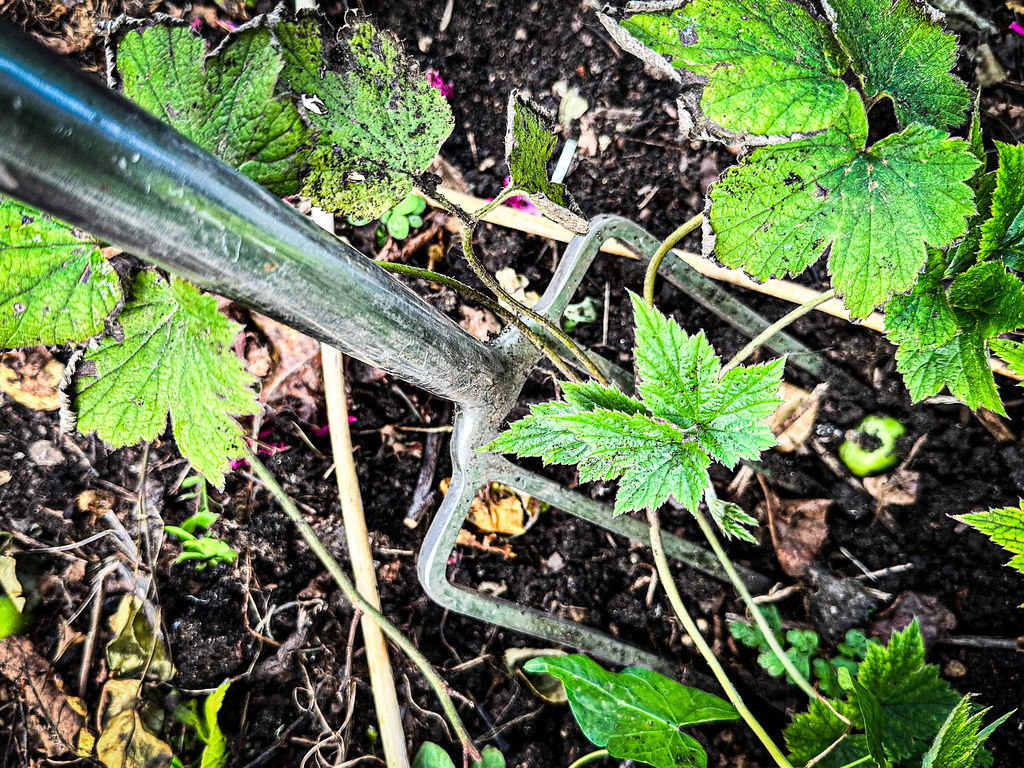
The tools she uses in the garden now are not the tools she used in 2014. The spade hangs on a nail in the shed and is taken down twice a year, once to lift the leeks and once to harvest the parsnips. The fork is used to loosen, not to turn. The broadfork she bought in 2020, a four-tined Meadow Creature, is the heaviest piece of soil work she does now, and she runs it through each bed once in spring without inverting the soil.
Her yields, measured imperfectly with a kitchen scale and a notebook, have not increased dramatically since she stopped tilling. They have, however, stopped fluctuating. The wet years no longer waterlog the beds. The dry years no longer crack the surface into hard plates.
She has lost some crops along the way that she might have grown better in tilled soil. The carrots have been mediocre for three years running. The first inch of soil is now soft enough for them, but below that the clay still resists. She has moved her carrots to a single raised bed at the back of the garden, where she fills the bed each autumn with a sandier mix.
This is, she will say, the kind of compromise a no-till gardener on clay learns to make.
The garden in late May 2026 looks, to a visitor, like any other kitchen garden in the Pioneer Valley. Tomato cages going up. Bean trellises being tied. The peas standing four feet tall against a length of jute netting.
What is different is underneath. The soil, when Marchetti lifts a transplant and the root ball comes up with a small forkful of soil attached, holds together loosely, breaks apart in her hand, and smells like a forest floor.
Eight years ago it would have come up in a clod that she would have had to break with the back of the spade.
She is not certain the change is irreversible. Soil, like a garden, requires attention to keep it where you have got it. But the work she does now is smaller, and the soil seems to be doing more of it.