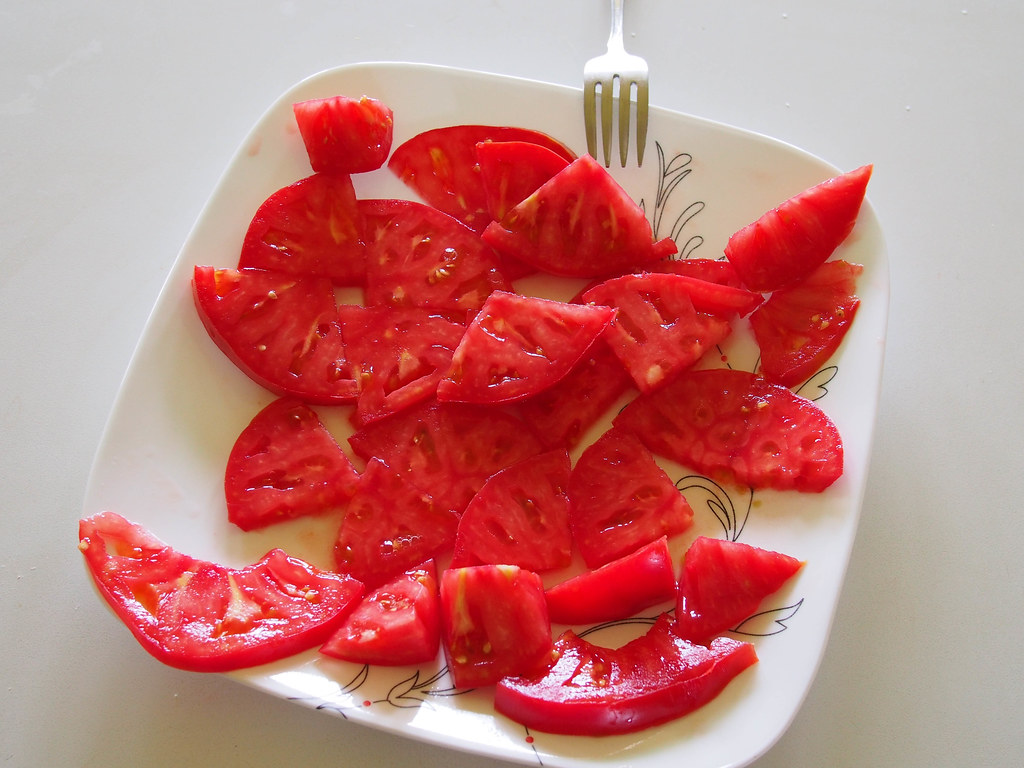
On the morning of September 4, 2025, Sage Marchetti set six Brandywine tomatoes on a folded tea towel beside the kitchen sink and let them come up to room temperature. The tomatoes had been picked the day before from a fifteen-foot row in her back garden in Northampton, Massachusetts. They were the largest of the season, each over a pound, the skin split in two cases from a heavy rain on August 30.
She had been saving Brandywine seed from the same line since 2007. The original packet came from the Hampshire Seed Library, where she now serves as a volunteer cataloguer. Eighteen years of selection had narrowed the line toward fruit that ripens before the second week of September, which in her zone matters.
The counter method is unglamorous and dependable. She uses a paring knife, a chipped Pyrex bowl she has owned since graduate school, a fine-mesh strainer, and four small jars with their labels half worn off. The fermenting jar sits on top of the refrigerator, where it stays around 74 degrees.
She cuts each tomato across the equator rather than through the stem, which exposes the seed cavities cleanly. The seeds and their gel come out with a spoon. The flesh goes into a separate container for sauce. Nothing is wasted, which she insists is not a virtue, only a habit.
Into the Pyrex bowl go the seeds and gel from all six fruits, plus an equal volume of tap water. She stirs once with the spoon, covers the bowl loosely with a square of cheesecloth, and writes the date on a strip of masking tape: Brandywine, Sept 4. The tape goes on the side of the bowl.
The ferment is the part that makes most home gardeners nervous. It should not. The gel that coats tomato seeds contains germination inhibitors. A short controlled ferment, three to four days at room temperature, breaks down that gel and also kills several seed-borne diseases, including bacterial canker and one of the spot diseases.
On day two the bowl smells yeasty, faintly alcoholic. By day three a white mould has formed across the surface, which is the desired outcome and not a problem. Marchetti stirs once a day with a wooden chopstick and resists the urge to do anything more.
On day four she fills the bowl with cold water and stirs vigorously. The viable seeds, the ones with full embryos, sink. The hollow seeds and pulp float. She pours off the floaters carefully, then refills and repeats four or five times until the water runs clear and only sound seed remains at the bottom.
The sound seed goes into the fine-mesh strainer. She rinses under running water for about a minute, then taps the strainer firmly against the sink edge to shake off as much water as possible.
Drying is where most home savers lose the line. The seeds must dry quickly enough that they do not begin to germinate, and slowly enough that the embryos are not damaged. Marchetti spreads them in a single layer on a labelled paper plate. Not a coffee filter, not parchment paper, both of which the seeds will stick to permanently.
The plate goes on top of the refrigerator beside the fermenting jar, in the dry warm draft from the back coils. She turns the seeds with her fingertip twice a day for the first three days. By day seven they snap cleanly when she bends one.
She tests dryness with a small hand mill she keeps for spices. A properly dry tomato seed shatters when crushed. A seed that bends or smears needs another two days.
Storage is the part that pays you back in February. Marchetti uses small glass jars she gets free from a friend who keeps bees. Each jar holds about four grams of seed, which is enough Brandywine for ten years of household planting. The jars are labelled in pencil on masking tape: variety, year, source row, average fruit weight.
She adds a small packet of silica gel, the kind that comes free in vitamin bottles, and seals the jar tight. The jars go in the back of the refrigerator's bottom shelf, where the temperature stays between 38 and 42 degrees year-round.
Properly stored, tomato seed remains viable for at least six years. Marchetti has germinated Brandywine seed from 2014 at 78 percent the past March. The Hampshire Seed Library accession from 2010, kept colder and drier in a borrowed lab freezer, came in at 91 percent.
Germination testing is the closing ritual of every saved batch. In late January she counts out twenty seeds onto a damp paper towel, folds it into a sandwich bag, and sets it on top of the refrigerator. After eight days she counts the sprouts. Below 70 percent and the line gets sown thick or discarded. Above 80 and she calls it a good year.
She keeps a small spiral notebook on the windowsill beside the saved-seed jars. Each entry takes three lines. Date, variety, germination rate, one note about the parent fruit. The notebook is now in its eleventh year.
The Brandywine line she works on came originally from an Amish farm in Lancaster County, Pennsylvania, by way of a 1982 SSE listing. She has selected only for ripening date and fruit weight, never for shape or colour. The result, after eighteen years, is a Brandywine that fruits seven to ten days earlier than the parent stock, with no measurable loss of size or flavour. Other savers selecting for other traits have arrived at quite different Brandywines from the same root.
She estimates the whole process, from picking the six fruits to closing the labelled jar, takes about forty minutes of active work spread across two weeks. The rest is waiting, which is most of seed saving and most of gardening.
In April she will open the jar, count out twenty seeds for the heated propagator, and start the next round. The remaining seed, more than she can use in a decade, will go to the seed library, where other gardeners in the Connecticut River Valley will plant it under names she will never know.