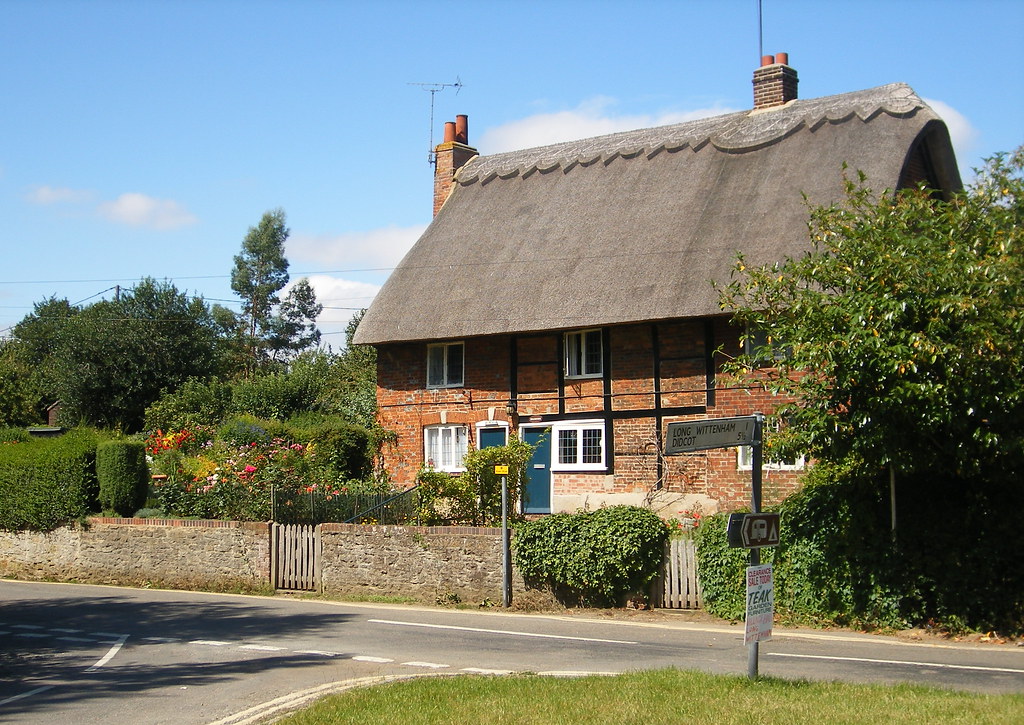
The garden runs alongside the western edge of a Carroll Gardens brownstone built in 1887, a strip of soil fourteen feet wide and thirty-eight feet long, walled on the south by the neighboring building and on the north by a wrought-iron railing that gives onto the sidewalk.
The gardener is Maeve Calderon, who left a kitchen at a Boerum Hill restaurant in 2021 and now teaches cooking from her home. She bought the brownstone with her wife in 2020 and inherited a side yard of compacted clay, three sycamore stumps, and an abandoned bicycle.
What she has made is, by her own description, a cottage garden in the English style, planted on the principle that no soil should be visible from May to October.
Calderon studied a single book before she began. Margery Fish's We Made a Garden, in a Faber paperback from 1956, given to her by her grandmother in Cork. She has marked the page where Fish writes that the cottage garden is not about taste but about plenitude.
The clay was the first problem. Brooklyn brownstone gardens are typically built on the rubble fill that levelled the original Long Island terrain, and Calderon's bed, when she tested it, came back as forty-one percent clay with a pH of 7.8.
She did not amend it as a whole. She dug planting pockets instead, working compost into each individual hole and leaving the surrounding soil to be improved by mulch over time. She estimates she has added four cubic yards of compost over six years.
The garden is structured around three small trees. A multi-stem serviceberry near the iron gate, a paperbark maple in the middle, and a young magnolia at the back, all chosen for scale.
Beneath them she has planted in three repeating layers. A ground layer of hardy geranium Rozanne, lady's mantle, and creeping thyme. A middle layer of catmint Walker's Low, salvia Caradonna, and a tall white phlox called David. An upper layer of foxglove, hollyhock, and a single Joe Pye weed at the back fence.
The hollyhocks self-sow into the cracks between the brownstone foundation and the path, which Calderon considers a gift.
Spring opens with bulbs. She planted three hundred and twenty in October 2020 and has added more each year. Crocus tommasinianus, Narcissus Thalia, and a late tulip called Spring Green that holds into the second week of May.
The catmint is in flower by Memorial Day. The roses, four David Austin shrubs grown along the south wall, begin their first flush by June 8 and rarely fail.
Calderon chooses roses for fragrance over form. She grows The Generous Gardener, Munstead Wood, Lady of Shalott, and a fourth she has stopped recommending because it is too prone to black spot in the humid Brooklyn summers.
The garden's middle season, late June through early August, is when its cottage character is clearest. Foxgloves spire above the catmint. Hollyhocks lean drunkenly against the iron railing. Bees work the salvia at a steady audible hum.
Calderon's neighbors stop at the railing. She has been asked if the garden is open to the public. It is not.
Late summer requires the cottage gardener's particular attention. The first wave of perennials begins to look tired by August 10. Calderon deadheads aggressively, cutting the catmint hard for a second flush and removing spent foxglove stalks to the compost heap behind the kitchen door.
She introduces late color through annuals. Cosmos Purity, zinnia Benary's Giant Lime, and a single drift of cleome that she allows to self-sow at the back of the bed.
Autumn closes with asters and a single planting of Mexican bush sage in a terracotta pot, brought out from the front stoop each September. The sage holds its purple flowers until the first hard frost, usually November 4.
What surprises Calderon, after six years, is how little time the garden actually takes. She estimates four hours a week from April to October and almost nothing in the winter beyond planning.
The principle she returns to is one she heard from her grandmother and which Fish makes in the book: a garden is not a project. It is a relationship.
Calderon waters by hand from a brass tap her wife installed in 2021. She uses no chemical fertilizers and no pesticides. The aphids are eaten by ladybirds that arrived without invitation in the second summer and have remained.
The side-yard garden, on a late spring evening, smells of catmint and the first roses. Calderon stands at the iron gate with a glass of cider and watches the bees work until the light goes.
Filed under