The bed had been pasture for eighteen years before Rowena Bell broke the turf in the autumn of 2025. It was a south-facing strip behind the cottage in South Brent, about twenty feet by twelve, with the kind of dense, fibrous root mass that comes from nearly two decades of undisturbed grass growth.
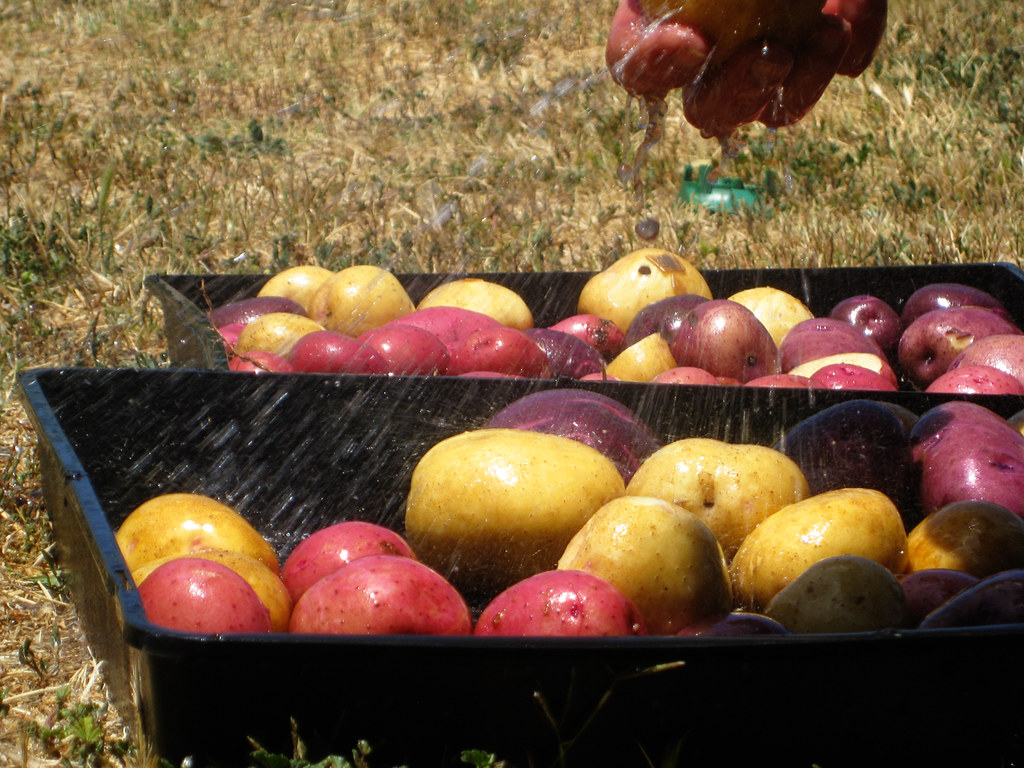
She covered it with cardboard and a six-inch layer of leaf mould for the winter and turned it shallowly in late March. The first crop she planted was Charlotte potatoes, set out the third week of April, twenty-eight tubers in four rows.
The crop came up well. The foliage by the end of June was thick and dark and healthy. Bell harvested the first row in early August and found, in nearly every tuber, the small clean tunnels and orange entry-points of wireworm damage.
Wireworms are the larvae of click beetles, Agriotes spp., and they are one of the most consistent problems in new beds converted from pasture. The adult beetle lays eggs in undisturbed grass. The larvae feed on the roots of grasses and other plants for between three and five years before pupating, which means that any given square metre of established pasture, in southern England, can contain a substantial standing population of wireworms in various life stages.
The grass keeps them fed. When the grass is removed, they look for what else is available, and a fresh potato tuber is at the top of their preferred menu.
The damage is not always visible from outside the tuber. The entry holes are narrow, often only a millimetre across, and the tunneling is internal. A potato that looks sound at harvest can be unusable in the kitchen ten weeks later, when the wireworm damage has provided an entry point for storage rot.
Bell harvested the rest of the bed in early September, partly because storing wireworm-damaged potatoes is a known route to disappointment, and partly because she wanted to assess the full extent of the problem. The damage was uniform across the bed. Roughly four out of every five tubers showed at least one entry tunnel. About a quarter were too badly damaged to use.
This is a fairly typical first-year potato result on converted pasture. It is also entirely preventable, in principle, by not planting potatoes in a converted-pasture bed in the first year.
Bell knew this. She planted them anyway, which she will be the first to admit was a calculated gamble that did not pay off. The reasoning was that potatoes are an effective break crop for a new bed, the hilling and harvesting work loosens the soil considerably, and the small risk of a partial loss was worth the soil-building benefit. The risk turned out to be larger than she had estimated.
What she will do instead, in the autumn of 2026, is plant the bed in a green manure of mustard and field beans, which the wireworms do not particularly favour and which will continue to break down the old grass root mass. The bed will go through 2027 as a brassica and legume rotation. The wireworm population, deprived of grass roots and unattractive to most of the vegetables she will plant, will collapse over the following two seasons.
The literature on wireworm population dynamics in converted ground suggests that the larval population in a previously-pastured bed will drop by roughly seventy percent in the second year after grass removal, and by another seventy percent in the third year. By year four the bed is, statistically speaking, safe for potatoes again.
This is a long timescale for a vegetable gardener and a short one for a soil.
Bell's plan for the bed, accordingly, runs through 2029. The first potato crop she will trust the bed to produce will be in the spring of that year. In the meantime the bed will produce kale, leeks, beans, brassicas, and onions, none of which are seriously damaged by wireworms in normal numbers.
There are interventions for wireworm control on a faster timescale, and Bell has tested several of them. None of them are particularly satisfactory.
Bait trapping with chitted potato or carrot pieces, buried at intervals across the bed and dug up after two weeks, will catch some larvae and provide a useful population estimate, but does not measurably reduce damage to the main crop. Beneficial nematodes targeted at wireworms exist but are expensive at field scale and inconsistently effective in cool soils. The historical chemical controls have been progressively withdrawn in the UK over the last decade.
The only reliable solution, in a small kitchen garden, is rotation and patience. The wireworm is a soil problem, the soil is a slow medium, and the gardener who plants potatoes in a converted-pasture bed in the first year is choosing to accept a substantial loss in exchange for the satisfaction of an early new-potato dinner.
Bell ate the salvageable Charlottes through August and September, cooked plainly with butter and salt, and considered the loss educational. The bed is currently in mustard. The next potatoes she plants there will be worth waiting for.