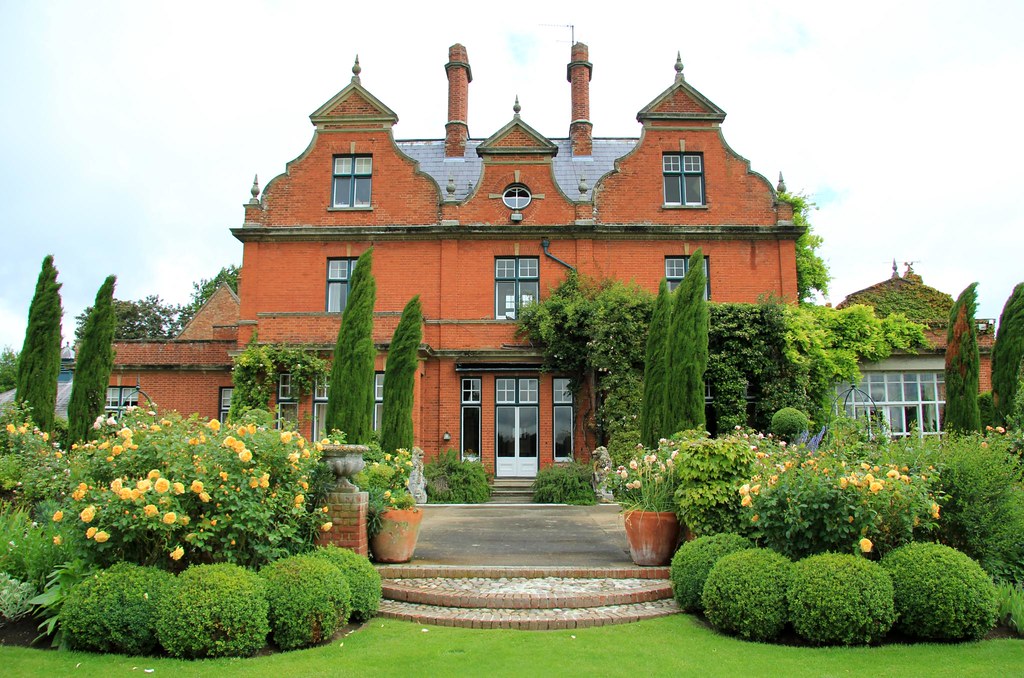
The monastery sits on a low rise above the Shannon callows in east Galway, a foundation that dates in its current form to 1898 but occupies a site associated with Cistercian settlement since the twelfth century. Twenty-one brothers live there now. In 1971, when the present garden was laid out, there were forty-three.
The garden lies behind the south wall of the cloister, on a half-acre rectangle of well-drained brown earth that has been cropped continuously since the founding of the modern community. It is enclosed on three sides by a limestone wall eight feet high and on the fourth by a clipped beech hedge that was set in 1972 by a brother named Cormac who is still living, at ninety-one, in the infirmary.
The current head gardener is Brother Anselm, sixty-seven, who came to the community in 1989 after a career as an electrical engineer in Cork. He has run the garden since 2011.
He is assisted by two younger brothers, Father Eunan in his early fifties and Brother Liam, recently professed at thirty-four, and by a lay sister named Maeve Kilkenny who comes in from a smallholding in Banagher three days a week.
On the morning of the visit, the third week of May, the four of them are in the asparagus bed. The asparagus has been in the same bed since 1971. It is being weeded with hand hoes, the spears emerging in good condition after a cold but dry April.
Brother Anselm explains that the bed was top-dressed with composted cow manure from a neighbour's herd in February, as it is every February, and given a light dusting of sea-weed meal in March. Nothing else is done to it. The bed has produced, by his estimate, thirty to forty kilograms of asparagus a year for over five decades.
The garden's plan is essentially the one drawn by a brother named Killian in 1971 in a small notebook still kept in the monastery's archive. It calls for sixteen beds, each roughly twenty feet by ten, separated by gravelled paths and arranged around a central well.
The well still works. It is hand-pumped, supplies the garden's irrigation in the dry weeks of July, and was capped in 2003 after a brother slipped on the wet flagstones and broke his hip.
Each bed has its rotation, settled in the early 1970s and adjusted only twice since. Brassicas follow legumes. Roots follow brassicas. Potatoes get their own corner of the garden, three beds in continuous rotation, on the basis that potato cyst nematode was identified in the soil in 1988 and the brothers have been cautious ever since.
The vegetables grown are the obvious ones: cabbage, kale, leek, parsnip, carrot, onion, beetroot, broad bean, runner bean, garden pea, lettuce, courgette, the asparagus, and a small bed of perpetual spinach. Tomatoes and cucumbers are grown in a Victorian lean-to glasshouse against the south wall.
The glasshouse was restored in 2004 with a grant from the Heritage Council. The original glass was kept where possible. The replacement panes were sourced from a Carlow firm that specialises in restoration glazing.
Inside, on the morning of the visit, are six tomato plants of an indeterminate variety that the community calls Brother Killian's Tomato, the seed of which has been saved on the property since at least 1976 and which Brother Anselm believes to be a selection from a packet of Moneymaker bought at a Galway hardware shop in the early 1970s.
The tomato is not commercially available. The community gives away perhaps a hundred seeds a year to visiting gardeners who ask.
Maeve Kilkenny, the lay sister, is responsible for the herb garden, which sits in a small enclosure at the eastern end of the walled garden and is laid out on a four-quarter pattern with a small clipped box at each corner.
She is fifty-three, was widowed in 2018, and began coming to the monastery in 2019 first as a guest and then as a regular contributor to the garden. She is paid a small stipend and the use of a cottage on the monastery grounds when she chooses to stay.
Her herbs are the household ones: thyme, sage, rosemary, parsley, chives, mint, lemon balm, bay. She also grows a small patch of calendula for the infirmary, which uses the petals in a salve that one of the brothers makes for the community's hands.
The garden feeds the community for the bulk of the year. Brother Anselm estimates that they grow seventy percent of the vegetables consumed in the refectory, with the remainder bought from a wholesaler in Loughrea. They buy no fruit. The orchard, outside the walled garden, supplies apples, plums, and a small crop of pears.
The orchard contains forty-seven trees. The oldest, a Bramley apple, was planted in 1924 and still bears in alternate years. The youngest, a Lord Lambourne planted in 2021 by Brother Liam on the occasion of his solemn profession, has not yet fruited.
There is no plan to expand the garden. There are no longer enough brothers to work more than they work now. Brother Anselm says, with the directness that the community is known for, that the garden may have to contract in his lifetime, and that this is not necessarily a sorrow.
What he hopes, he says, is that the asparagus bed will outlive him. Sister Maeve has expressed interest in continuing to come even after the brothers can no longer manage. The lay sister is younger than most of the community.
The visitor leaves through the small gate in the south wall that opens onto the lane down to the Shannon. The bells ring for None as the car reaches the main road. The asparagus, presumably, continues to grow.