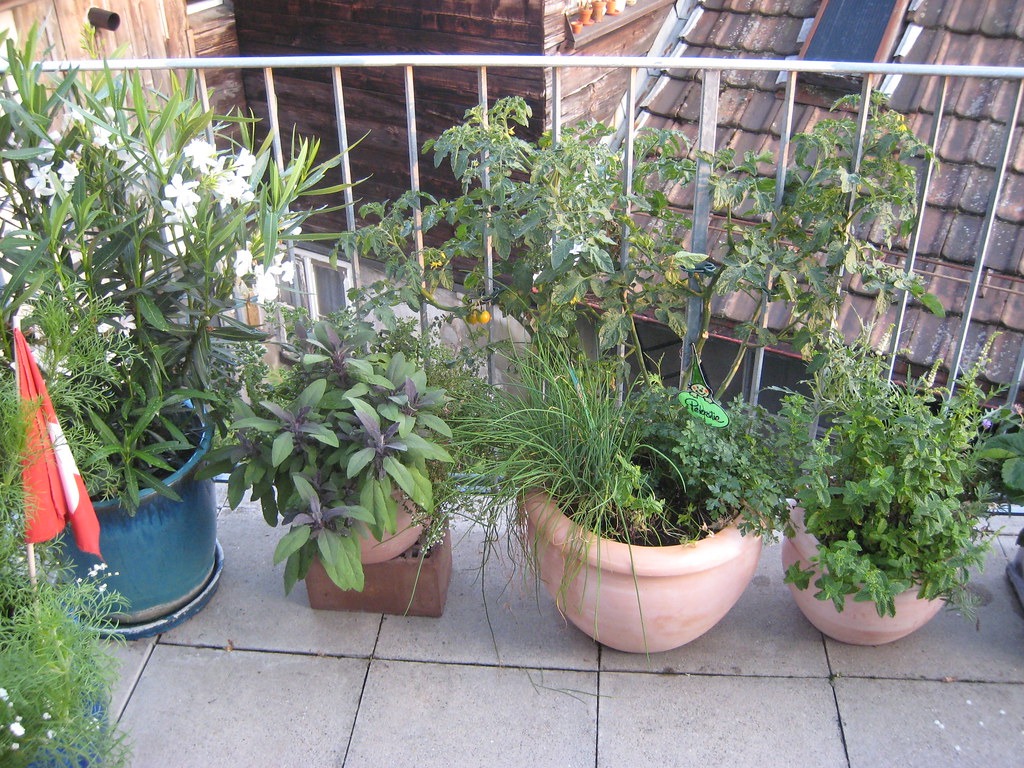
The balcony measures two point four metres by one metre, or roughly twenty-six square feet, on the south face of a 1978 concrete apartment building in Shimokitazawa, west Tokyo. The building has nine floors. The balcony is on the third.
Its keeper is Hisako Maeda, fifty-eight, a translator who works between English, French, and Japanese. She has lived in the apartment since 1997. She began the balcony garden in 2003 with three pots of basil and a single cherry tomato.
It now contains, by her own count on the morning of the visit, seventeen herbs, three tomato plants, a single fig tree in a forty-litre pot, two strawberry stack-planters, a small row of leaf lettuce, and a chive plant that she dates to 2004 by means of a faded label.
The fig is the showpiece. It is a Ficus carica Brown Turkey, bought as a bare-root sapling from a nursery in Saitama in 2011 and root-pruned every February since. It produced ninety-two figs in 2024 and is on track, Maeda thinks, for slightly more in 2026.
The pot is a Korean glazed stoneware piece that she found at a flea market in Setagaya in 2013 for the equivalent of eighteen dollars. The drainage hole is the diameter of a one-yen coin. She lines the bottom with broken pottery and a square of weed cloth.
Maeda waters by hand, in the cool of the evening, with a long-necked Japanese watering can called a jouro that she has used since the beginning. The can holds two point five litres. She refills it from the kitchen sink, which is six paces from the balcony door.
On a normal summer day she carries five cans of water. On a hot day, eight. The work takes perhaps twenty minutes. She does not consider it work.
The balcony faces south and receives roughly five hours of direct sun in summer, less in winter. The building to the south is two storeys lower than hers, which is the reason she chose the apartment in 1997. She paid slightly more for the south aspect and has never regretted it.
The wind, in autumn, comes in over the rooftops and can take a tomato cage with it. Maeda lost a Sungold plant in October 2017 to a sudden gust. She now ties everything to a stainless-steel wire grid that she had a local welder make in 2018.
The herbs are mostly culinary. Three kinds of basil, including a Thai variety she grows from seed each spring. Rosemary in a long terra cotta trough, six years old, that overwinters outside. Mint, in its own pot, isolated. Oregano. Marjoram. Thyme. Lemon verbena, which she takes inside in November.
She also grows shiso, both green and red, which is a default of the Japanese balcony garden but which Maeda values particularly because she uses it almost daily. The green shiso is wrapped around grilled fish. The red is salted and pressed for the household's plum harvest.
The plums come from a fifteen-year-old Prunus mume at her sister's house in Yamanashi. Maeda processes thirty pounds of them a year in late June in her apartment kitchen, salting them in a small cedar press and laying them out to dry on a bamboo mat that fits, just, across the balcony rail.
The mat itself is forty-four years old and was her mother's. It has begun to fray at one corner. Maeda will repair it this winter.
Asked about the philosophy of the balcony garden, she shrugs and says she does not have one. She has the balcony. The balcony has sun. The plants want to grow. The arrangement is older than her tenancy and will outlast it.
Pressed further, she mentions a remark by the writer Mirei Shigemori, the twentieth-century garden designer, that a small garden teaches you to see what you have. She does not endorse the remark but does not contradict it.
The afternoon's task is the re-potting of the rosemary trough, which has begun to look tired. Maeda lifts the rosemary out in three sections, trims the roots with a pair of kitchen scissors, and replants in fresh compost mixed with a handful of pumice and a small spoon of an organic fertiliser she buys from a garden centre in Setagaya.
The whole operation takes forty minutes. The discarded soil goes into a sealed plastic tub by the back door, which Maeda carries down to the building's communal garden patch every few weeks to add to the small compost bin she shares with two other tenants.
Of those two other tenants, one is a retired schoolteacher who grows tomatoes on her ground-floor patio, and the other is a young couple who grow a single rosemary plant and ignore it.
Maeda does not proselytise. She is asked, occasionally, by neighbours who admire the balcony, how they should begin. She tells them to start with basil. If the basil lives through one summer, they should try a tomato. If the tomato fruits, they can think about a fig.
Few of them get to the fig. Most of them, she says without judgement, get tired of carrying water in August.
She does not. She has been doing it for twenty-three years.